Facebook Ads Cloaking is a technique discussed in digital advertising, particularly by businesses operating in competitive or restricted categories. Facebook advertising campaigns are subject to advertising policies, automated review systems, landing-page requirements, and ongoing campaign monitoring.
For advertisers, understanding how cloaking works, why it is used, and what risks and limitations it involves can provide useful context when evaluating different advertising strategies.
In this guide, we explain Facebook’s ad review process, the concept of Facebook Ads Cloaking, common approaches associated with cloaking, and the key considerations advertisers should understand before using this type of strategy.
How Does Facebook’s Automated System Review Ads?
Facebook uses automated systems and, in some cases, human review to evaluate advertising content and landing pages. The review process can consider factors such as ad creative, text, targeting, destination pages, and compliance with applicable advertising requirements.
Review processes can also continue after an ad has been approved. This means advertisers should monitor campaign performance, landing-page experience, and policy requirements throughout the life of a campaign.
Understanding the review process is important when evaluating Facebook Ads Cloaking because campaign structure and landing-page behavior can affect how advertising content is reviewed.
How Does Facebook Ads Cloaking Work?

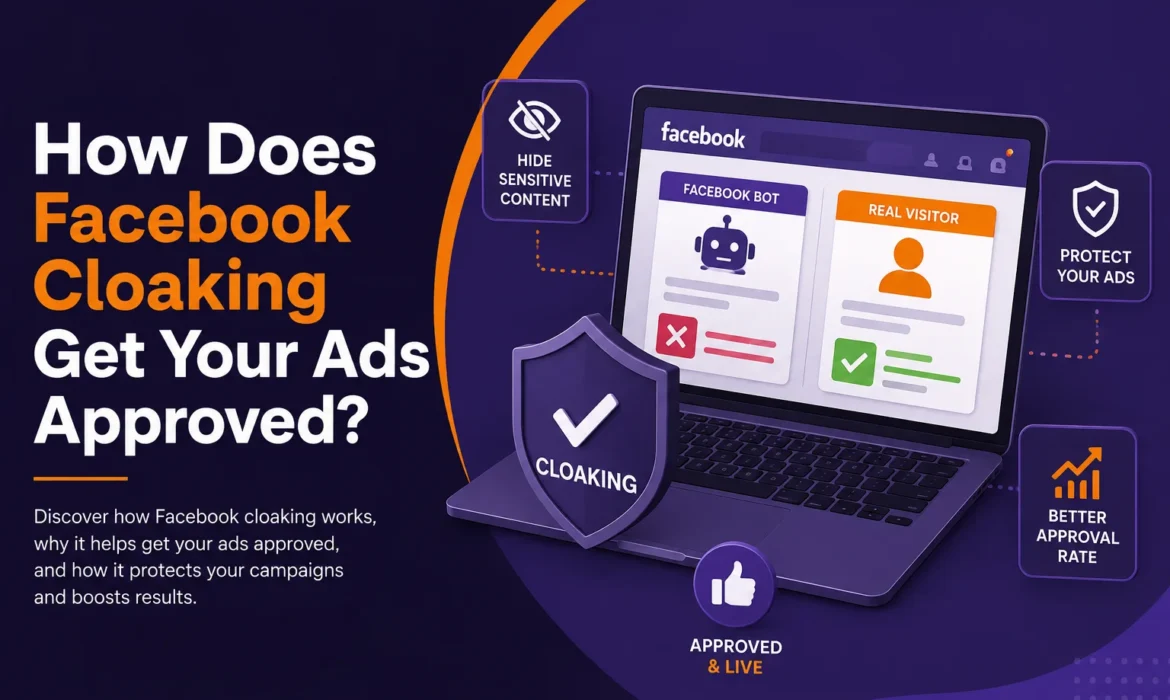
Facebook Ads Cloaking generally refers to technology that can present different content or landing-page experiences depending on characteristics of incoming visitors or traffic sources. Advertisers may discuss several technical approaches when describing how cloaking systems operate.
IP-Based Filtering:
IP-based filtering uses network information to classify incoming traffic. In discussions of cloaking technology, it may be used as one signal for determining how a visitor is handled.
User-Agent Detection:
User-agent information identifies characteristics of a browser, operating system, or device. Cloaking systems may use this information as one factor when classifying traffic.
JavaScript-Based Detection:
JavaScript can be used to determine visitor or browser characteristics and modify page behavior dynamically. Its implementation should also be considered alongside page performance and user experience.
Conditional Redirection:
Conditional redirection can change the destination or page experience based on predefined traffic characteristics. Advertisers should consider how redirects affect usability, transparency, and applicable platform requirements.
Geo-targeting:
Geo-targeting allows campaigns and landing-page experiences to be tailored to different locations. It is commonly used for legitimate localization and audience segmentation as well as in discussions about cloaking technology.
Why Do Advertisers Consider Facebook Ads Cloaking?
Facebook Ads Cloaking is discussed in relation to advertisers operating in competitive or restricted categories. However, its use can involve important platform-policy, transparency, technical, and campaign-management considerations.
Competitive Niches:
Businesses in competitive categories may explore different advertising strategies when conventional campaigns face limitations. Advertisers should distinguish between lawful advertising challenges and content that violates platform requirements.
Campaign Management:
Different campaign structures and landing-page experiences can affect performance, usability, and review outcomes. Careful testing and monitoring are important for understanding campaign behavior.
Audience Reach:
Effective Facebook advertising depends on relevant audiences, suitable creative, landing-page quality, and campaign optimization. These factors should be evaluated alongside any technology used to manage traffic.
Risk Management:
Cloaking can create additional policy and account risks if it is used to conceal content or misrepresent the destination of an advertisement. Advertisers should understand these risks before implementing a cloaking strategy.
How AdsApproved Supports Facebook Advertising Campaigns

Ads Approved utilizes sophisticated techniques to circumvent Facebook’s ad review process. Here is how it utilizes cloaking to get you an ad approval.
Campaign & Technical Setup
AdsApproved helps businesses structure their advertising campaigns and associated technical setup based on campaign requirements, target markets, and landing-page needs.
Landing-Page Strategy:
Landing pages should provide relevant information, clear navigation, and a suitable experience for visitors. AdsApproved can assist with landing-page setup and campaign-related requirements.
Ad Creative & Campaign Strategy:
Effective campaigns require relevant creative, clear messaging, appropriate targeting, and ongoing testing. Campaign performance can be reviewed to identify opportunities for improvement.
Ongoing Monitoring:
Advertising platforms and campaign conditions can change over time. Ongoing monitoring helps identify performance issues and determine when campaign adjustments may be necessary.
Final Thoughts
Facebook Ads Cloaking is a technical advertising concept that can involve different landing-page and traffic-management approaches. Before using it, advertisers should understand how Facebook’s advertising requirements, landing-page experience, campaign performance, and potential policy risks apply to their specific situation.
If you are evaluating Facebook advertising solutions for a competitive niche, AdsApproved provides campaign and cloaking-related services that can be reviewed based on your business requirements.
Explore our Ads Cloaking Services to learn more about the platforms and solutions we support