Ads cloaking Pinterest is a topic that many advertisers research when exploring different approaches to Pinterest advertising. Understanding how Pinterest ad cloaking works, its potential benefits, limitations, and compliance risks can help advertisers make better decisions about their campaigns and landing pages.
Pinterest advertising requires businesses to follow platform policies while creating relevant experiences for their audiences. In this guide, we explain the concept of ads cloaking on Pinterest, how it is commonly discussed, and what advertisers should consider before using any cloaking-related strategy.
Pinterest is a widely used online social media platform. It has billions of active users, and you can promote your brand there with the help of advertisements. Suppose you want to achieve the best results from your marketing campaign on Pinterest. In that case, you must utilize the cloaking technique. It is an innovative technique used by many restricted businesses and advertising agencies to boost ad campaigns and reach a larger audience. Suppose you need help keeping up with Pinterest’s rules and restrictions regarding the promotion of specific content on its platform. Cloaking is the only solution for you.
Ads Approved is an experienced advert that offers cloaking and ad management services worldwide the globe. With its years of experience, you can easily achieve your business goals.
Let’s discuss the cloaking of Pinterest ads and their various features.
What Is Ads Cloaking on Pinterest?
Ads cloaking Pinterest is a unique method used by many restricted businesses to get approval for Pinterest ads. As you know, getting authorization for ads these days when ad bots and ad reviewers are strictly targeting nonpolicy-compliant ads. Therefore, cloaking is the optimal solution to deceive ad bots, ad reviewers, and search engine crawlers on Pinterest. You can also acquire cloaking techniques for other online platforms such as Facebook, YouTube, Google, Snapchat, Instagram, TikTok, Bing, etc.
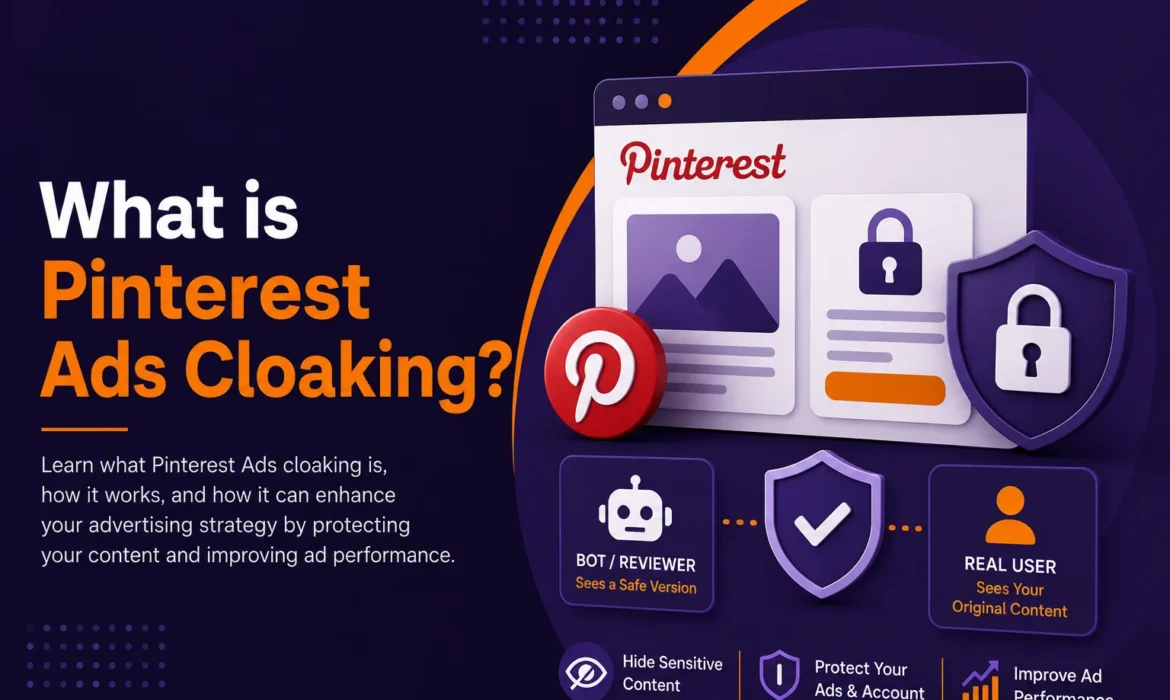
Cloaking works by showing different content to target human users and ad bots. Pinterest ads are cloaked so that they show a safe page that follows the platform’s policies to Pinterest’s ad bots and review system. On the other hand, they show a non-policy-compliant offer page that promotes restricted products or services to the target human audience.
The main goal of Pinterest advert cloaking is to circumvent Pinterest’s strict advertising rules and regulations. Pinterest establishes these guidelines to ensure the safety of its users, the relevancy of adverts, and the ads’ meeting platform requirements to maintain quality.
Types of Pinterest Cloaking Ads

There are three types of Pinterest advert cloaking. The three types of cloaking describe the various ethical approaches to cloak ads.
Black Hat Cloaking:
It involves deceiving Pinterest’s review system and showing restricted content ads to users. This cloaking shows safe content to ad bots and the actual policy-violating ad to the platform’s regular users. The practice of black hat cloaking is unethical. If not done expertly, it may lead to heavy penalties or account suspension.
White Hat Cloaking:
It is a transparent cloaking technique that most advertisers utilize to enhance user experience. It is meant to do something other than deceive Pinterest’s ads reviewing system. However, it is still somewhat manipulative regarding Pinterest’s policies. White hat cloaking enhances user experience by showing them relevant content that does not significantly violate Pinterest’s rules.
Gray Hat Cloaking:
It is another type of cloaking technique used to manipulate Pinterest policies to get ad approval. Gray hat cloaking involves using IP-based cloaking to showcase different ads to a target audience in different regions of the world.
How Does Pinterest Ad Traffic Management Work?
Advertisers may use different traffic-management and landing-page techniques to understand visitor behavior and improve campaign performance. These approaches can involve traffic analysis, audience segmentation, landing-page testing, and conversion tracking.
Any advertising strategy should be implemented in accordance with Pinterest’s advertising policies and applicable requirements. Advertisers should avoid using techniques intended to mislead ad reviewers or bypass platform enforcement.
How Can Ads Cloaking Pinterest Affect Your Marketing Strategy?

Advertisers researching ads cloaking Pinterest often want to understand whether different landing-page experiences can affect campaign performance. In practice, campaign results depend on factors such as audience targeting, creative quality, landing-page relevance, user experience, and conversion tracking.
Testing different compliant landing pages and ad creatives can help advertisers identify which combinations generate stronger engagement and conversions. A clear understanding of Pinterest’s advertising requirements is also important when planning campaigns.
Pinterest Ads Cloaking vs. Pinterest Ads Approval
Pinterest Ads Cloaking and Pinterest Ads Approval are different topics. Ads approval focuses on meeting Pinterest’s advertising requirements and getting campaigns accepted, while cloaking refers to techniques for presenting different experiences to different visitors.
Advertisers should prioritize compliant advertising practices and make sure their landing pages, offers, and creatives meet the applicable platform requirements.
Conclusion
Ads cloaking Pinterest is a topic that advertisers should understand before choosing any campaign or landing-page strategy. While different traffic-management approaches can affect how visitors experience a campaign, compliance with Pinterest’s advertising requirements should remain a priority.
By combining relevant ad creatives, useful landing pages, accurate tracking, and a clear understanding of platform requirements, advertisers can build a stronger Pinterest advertising strategy.
Ads Approved is the ideal cloaking service provider. It not only cloaks your ads but also keeps them updated, manages them, and employs immersive tactics to enhance results.